
If you’ve been hurt in an accident, knowing how to file a lawsuit can feel overwhelming. You might be asking yourself: Where do I start?
What steps should I take? And how can I make sure you get the compensation you deserve? This Accident Lawsuit Filing Guide is designed to walk you through the process, step by step, in clear and simple terms. By understanding what to do and what to avoid, you can protect your rights and make confident decisions.
Keep reading to learn how to turn a difficult situation into a path toward justice and recovery.

Preparing Your Case
Gathering evidence is crucial for a strong accident case. Collect photos of the scene, damages, and any injuries. Keep all medical records and bills safe. Witness statements add value, so get their contact info and written accounts.
Documenting the accident means writing down what happened as soon as possible. Note the date, time, location, and weather conditions. Describe how the accident occurred and any actions taken afterward. Keep copies of police reports and insurance forms.
Notifying relevant parties includes telling your insurance company about the accident quickly. Inform the other driver or party involved if needed. Notify your lawyer or legal advisor early to get proper guidance and protect your rights.
Filing The Lawsuit
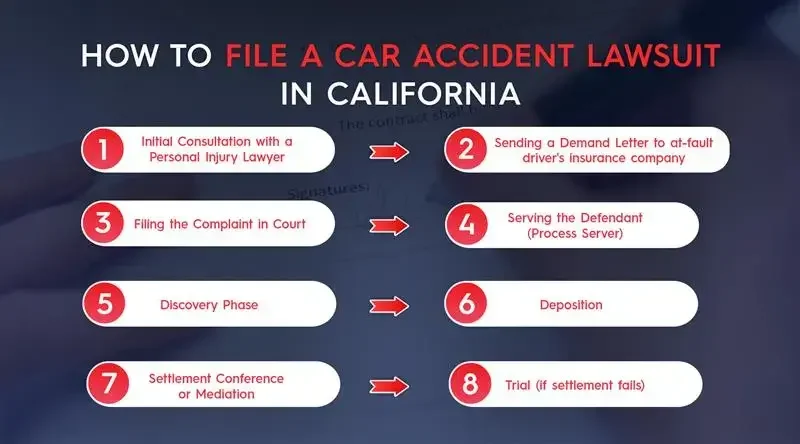
Choosing the right court is key. Cases usually go to state or federal court. State courts handle most accident lawsuits. Federal courts only take cases with special rules or big money claims. Picking the correct court saves time and money.
Drafting the complaint means writing down your case. It must include who is involved, what happened, and what you want. Clear facts help the judge understand your side. The complaint starts the legal process.
Meeting statute of limitations means filing your case on time. Each state has a deadline, often 1-3 years after the accident. Missing this deadline can end your case before it starts. Keep track of important dates.
Navigating Legal Procedures
The discovery process helps both sides collect facts and evidence. This includes exchanging documents, asking questions, and interviewing witnesses. It is important to be honest and thorough during this phase. The goal is to understand all details about the accident and injuries.
Motions and hearings are court meetings to solve disagreements. Lawyers may ask the judge to decide on certain issues before the trial. These can include requests to dismiss parts of the case or limit what evidence is allowed. Hearings help clarify the case and set the path forward.
Settlement negotiations happen when both sides try to agree without a trial. Offers are made to pay money in exchange for dropping the lawsuit. This can save time, money, and stress. Many cases end with a fair settlement before going to court.

Working With Insurance Companies
Report the claim quickly to avoid delays. Give the insurance company clear details about the accident. Write down the date, time, and place. Keep a copy of your report for your records.
When handling insurance adjusters, stay calm and polite. Answer only the questions asked. Do not share extra information that may hurt your case. Take notes about each call and the adjuster’s name.
Avoid common mistakes like accepting an early settlement without knowing your rights. Do not sign any papers without reading them carefully. Avoid giving recorded statements without legal advice. Protect your interests at all times.
Hiring An Attorney
Seek legal help promptly after an accident to protect your rights. Early action can make a big difference in your case.
Choose a lawyer who has experience with accident lawsuits. Look for someone who communicates clearly and listens well.
Discuss legal fees openly before hiring. Many lawyers work on a contingency basis, meaning they get paid only if you win.
| Type of Legal Fee | Description |
|---|---|
| Contingency Fee | Lawyer is paid a percentage of the settlement or award. |
| Hourly Fee | Lawyer charges for each hour worked on the case. |
| Flat Fee | Fixed amount charged for specific legal services. |
Maximizing Compensation
Calculating damages involves adding all losses caused by the accident. This includes medical bills, lost wages, pain, and property damage. Keep all receipts and records. They prove how much money you need. Sometimes, future costs are included too, like long-term care or lost earning ability.
Proving liability means showing who caused the accident. Evidence like photos, witness statements, and police reports help. Clear proof makes your claim stronger. Fault must be shown by negligence or carelessness.
Presenting your case effectively needs clear facts and good organization. Tell your story calmly and stick to the main points. Use documents and evidence to support your words. A simple, honest approach wins trust and respect from judges or juries.
Special Situations
Product liability claims arise when a defective product causes injury. The manufacturer, distributor, or seller may be held responsible. Proof of defect and injury is essential. Keep all product evidence and medical records.
Accidents involving government entities require special steps. Filing a claim usually means submitting a notice within a short time. This notice informs the government about the injury. Missing the deadline can end the claim.
Handling disputed fault means fault is not clear. Each side may blame the other. Evidence like photos, witness statements, and police reports help. Sometimes, fault is shared. Texas follows the comparative fault rule. This rule reduces compensation by the injured person’s fault percentage.
Frequently Asked Questions
How Much Will I Get From A $50,000 Settlement?
The amount you receive from a $50,000 settlement depends on legal fees, medical costs, and taxes. Expect about 60-80% after deductions.
What Not To Say When Filing A Claim?
Avoid admitting fault or exaggerating injuries when filing a claim. Do not guess or provide inaccurate details. Stay calm and stick to facts only. Avoid blaming others or making emotional statements. Do not accept offers without consulting a lawyer first.
What Are The 4 Proofs Of Negligence?
The four proofs of negligence are duty, breach, causation, and damages. Duty means the defendant owed a legal responsibility. Breach shows they failed to meet that duty. Causation links the breach to the injury. Damages prove the plaintiff suffered harm or loss.
What Are The 7 Steps Of Accident Investigation?
The 7 steps of accident investigation are: 1) Secure the scene, 2) Collect evidence, 3) Interview witnesses, 4) Analyze data, 5) Determine cause, 6) Recommend corrective actions, 7) Document findings in a report.
Conclusion
Filing an accident lawsuit takes careful steps and clear information. Start early to protect your rights and gather all facts. Knowing the process helps you avoid mistakes and delays. Stay organized and follow the legal requirements closely. Seek advice when unsure to make the best decisions.
Taking action can lead to fair compensation and closure. Keep focused and patient throughout the process. Your efforts matter in achieving a positive outcome.
Read More
- Product Liability Verdict Examples: Shocking Wins & Key Insights
- Injury Medical Record Review: Essential Tips for Accurate Analysis
- Expert Medical Witness Fees: Ultimate Guide to Fair Pricing
- Civil Injury Lawsuit Process: Step-by-Step Guide to Win Your Case
- Independent Medical Exam Claim: Maximize Your Benefits Today
- Medical Malpractice Verdict Search: Uncover Winning Case Results Fast
- Average Lawsuit Settlement Value: What You Need to Know Today
- Personal Injury Verdict Amounts: Shocking Cases and Top Payouts
- Injury Settlement Demand Letter: Essential Tips for Maximum Compensation
- Workplace Injury Court Awards: Maximizing Your Compensation Today